
Ayurvedic Food Combining: Principles to Balance Doshas & Digestion
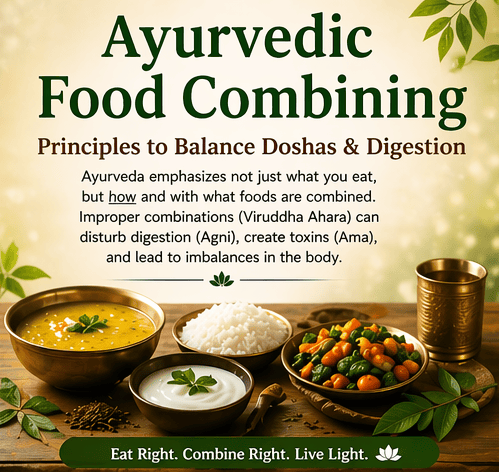
Ayurveda emphasizes not just what you eat, but how and with what foods are combined. Improper food combinations, known as Viruddha Ahara, can disturb digestion (Agni), create toxins (Ama), and lead to imbalances in the body. This guide explores the principles of Ayurvedic food combining to support better digestion, balance doshas, and maintain overall health.
4/22/20262 min read
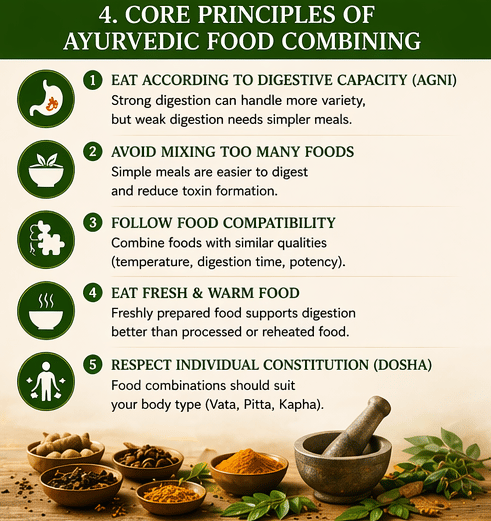
Core Principles of Ayurvedic Food Combining
1. Eat According to Digestive Capacity (Agni)
Strong digestion can handle more variety, but weak digestion needs simpler meals.
2. Avoid Mixing Too Many Foods
Simple meals are easier to digest and reduce toxin formation.
3. Follow Food Compatibility
Combine foods with similar qualities.
4. Eat Fresh & Warm Food
Fresh food supports digestion better than reheated or processed food.
5. Respect Individual Constitution (Dosha)
Food should match your body type (Vata, Pitta, Kapha).
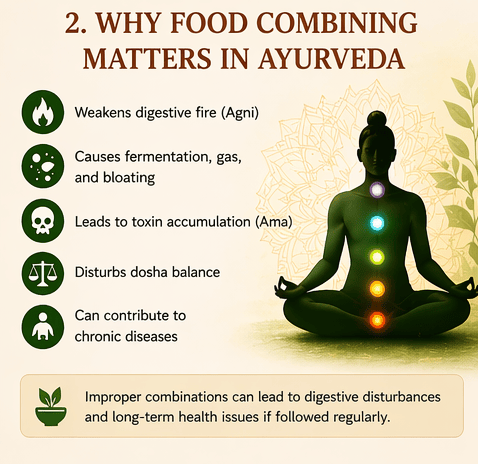
Ayurveda emphasizes that even healthy foods can become harmful when combined incorrectly. Improper combinations, known as Viruddha Ahara, disrupt digestion, weaken Agni (digestive fire), and lead to toxin (Ama) formation in the body.
This imbalance can affect metabolism, gut health, and overall well-being.
👉 For more detailed examples and combinations, refer to this guide:
Click here for detailed Ayurvedic food combinations
What is Viruddha Ahara
(Incompatiblea Food Combining)?
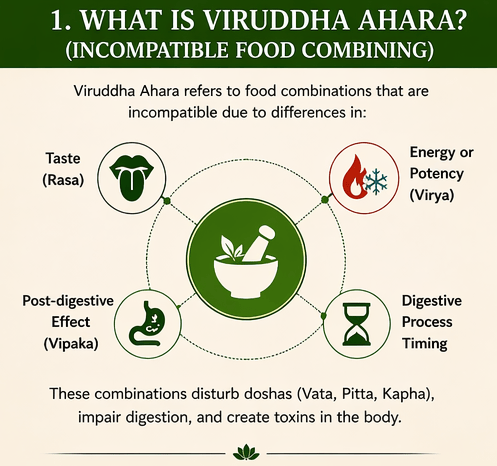
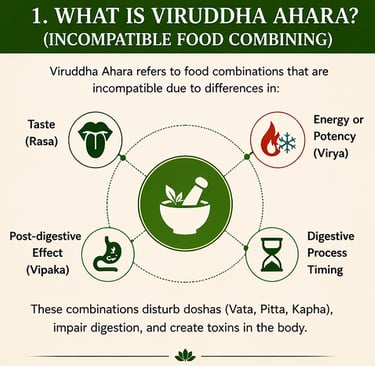
Viruddha Ahara refers to food combinations that are incompatible due to differences in:
• Taste (Rasa)
• Energy or potency (Virya – heating or cooling)
• Post-digestive effect (Vipaka)
• Digestive process timing
These combinations disturb doshas (Vata, Pitta, Kapha), impair digestion, and create toxins in the body.
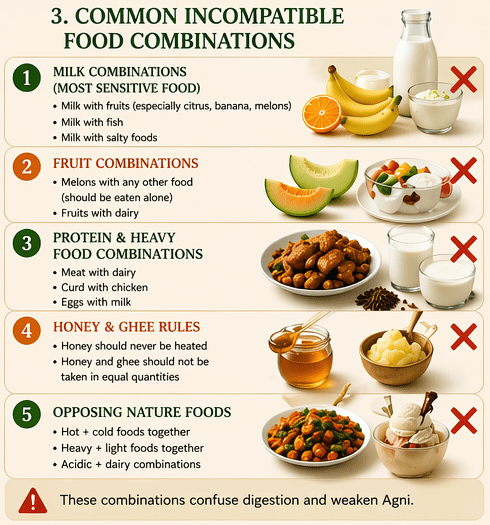
Common Incompatible Food Combinations
1. Milk Combinations (Most Sensitive Food)
• Milk with fruits (banana, citrus, melons)
• Milk with fish
• Milk with salty foods
Milk combined with incompatible foods can disturb digestion due to opposite qualities.
2. Fruit Combinations
• Melons with any other food (should be eaten alone)
• Fruits with dairy
Melons especially should be eaten separately for proper digestion.
3. Protein & Heavy Food Combinations
• Meat with dairy
• Curd with chicken
• Eggs with milk
These combinations overload digestion and slow metabolism.
4. Honey & Ghee Rules
• Honey should never be heated
• Honey and ghee should not be taken in equal quantities
Such combinations are considered toxic in Ayurveda.
5. Opposing Nature Foods
• Hot + cold foods together
• Heavy + light foods together
• Acidic + dairy combinations
These confuse digestion and weaken Agni.
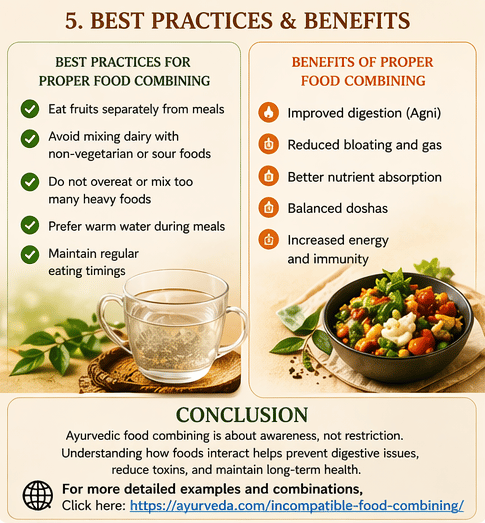
Best Practices for Proper Food Combining
• Eat fruits separately from meals
• Avoid mixing dairy with sour or non-vegetarian foods
• Prefer warm water during meals
• Maintain regular eating timings
Benefits of Proper Food Combining
• Improved digestion (Agni)
• Reduced bloating and gas
• Better nutrient absorption
• Balanced doshas
• Increased energy and immunity
Conclusion
Ayurvedic food combining is about awareness, not restriction. Understanding how foods interact helps prevent digestive issues, reduce toxins, and maintain long-term health.