
Yoga Asanas for Spine Strength and Digestion
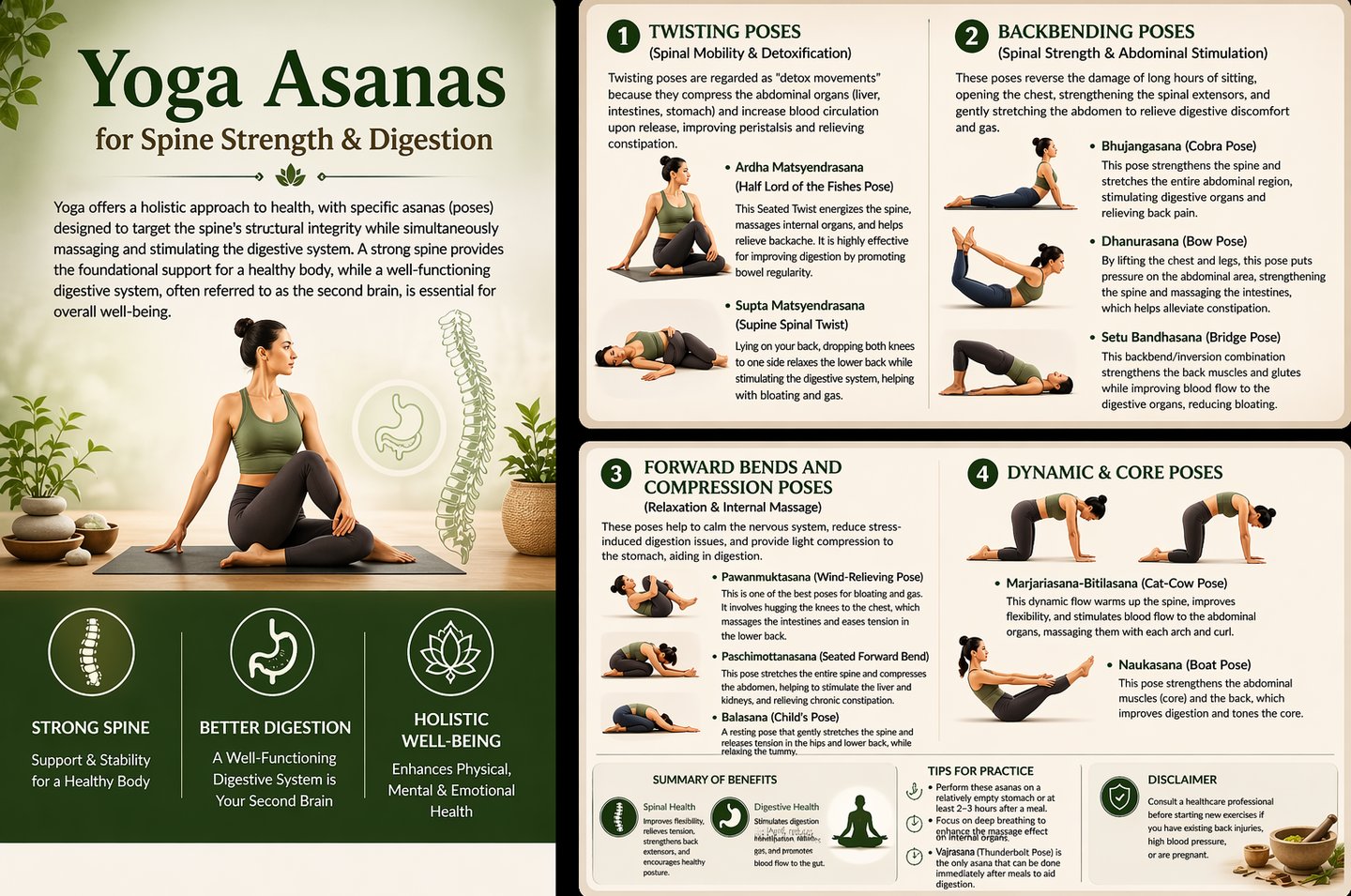
Yoga offers a holistic approach to health, with specific asanas (poses) designed to target the spine's structural integrity while simultaneously massaging and stimulating the digestive system. A strong spine provides the foundational support for a healthy body, while a well-functioning digestive system, often referred to as the second brain, is essential for overall well-being.
4/22/20262 min read
Yoga offers a holistic approach to health, with specific asanas (poses) designed to target the spine's structural integrity while simultaneously massaging and stimulating the digestive system. A strong spine provides the foundational support for a healthy body, while a well-functioning digestive system, often referred to as the second brain, is essential for overall well-being.
Here is a guide to asanas that strengthen the spine and aid digestion, categorized by their primary movements.
1. Twisting Poses (Spinal Mobility & Detoxification)
Twisting poses are regarded as "detox movements" because they compress the abdominal organs (liver, intestines, stomach) and increase blood circulation upon release, improving peristalsis and relieving constipation.
• Ardha Matsyendrasana (Half Lord of the Fishes Pose): This Seated Twist energizes the spine, massages internal organs, and helps relieve backache. It is highly effective for improving digestion by promoting bowel regularity.
• Supta Matsyendrasana (Supine Spinal Twist): Lying on your back, dropping both knees to one side relaxes the lower back while stimulating the digestive system, helping with bloating and gas.
2. Backbending Poses (Spinal Strength & Abdominal Stimulation)
These poses reverse the damage of long hours of sitting, opening the chest, strengthening the spinal extensors, and gently stretching the abdomen to relieve digestive discomfort and gas.
• Bhujangasana (Cobra Pose): This pose strengthens the spine and stretches the entire abdominal region, stimulating digestive organs and relieving back pain.
• Dhanurasana (Bow Pose): By lifting the chest and legs, this pose puts pressure on the abdominal area, strengthening the spine and massaging the intestines, which helps alleviate constipation.
• Setu Bandhasana (Bridge Pose): This backbend/inversion combination strengthens the back muscles and glutes while improving blood flow to the digestive organs, reducing bloating.
3. Forward Bends and Compression Poses (Relaxation & Internal Massage)
These poses help to calm the nervous system, reduce stress-induced digestion issues, and provide light compression to the stomach, aiding in digestion.
• Pawanmuktasana (Wind-Relieving Pose): This is one of the best poses for bloating and gas. It involves hugging the knees to the chest, which massages the intestines and eases tension in the lower back.
• Paschimottanasana (Seated Forward Bend): This pose stretches the entire spine and compresses the abdomen, helping to stimulate the liver and kidneys, and relieving chronic constipation.
• Balasana (Child's Pose): A resting pose that gently stretches the spine and releases tension in the hips and lower back, while relaxing the tummy.
4. Dynamic & Core Poses
• Marjariasana-Bitilasana (Cat-Cow Pose): This dynamic flow warms up the spine, improves flexibility, and stimulates blood flow to the abdominal organs, massaging them with each arch and curl.
• Naukasana (Boat Pose): This pose strengthens the abdominal muscles (core) and the back, which improves digestion and tones the core.
Summary of Benefits
• Spinal Health: Improves flexibility, relieves tension, strengthens back extensors, and encourages healthy posture.
• Digestive Health: Stimulates digestion fire (Agni), reduces constipation, relieves gas, and promotes blood flow to the gut.
Tips for Practice
• Perform these asanas on a relatively empty stomach or at least 2–3 hours after a meal.
• Focus on deep breathing to enhance the massage effect on internal organs.
• Vajrasana (Thunderbolt Pose) is the only asana that can be done immediately after meals to aid digestion.
Disclaimer
Consult a healthcare professional before starting new exercises if you have existing back injuries, high blood pressure, or are pregnant.